Showing posts with label net metering. Show all posts

September 17, 2021

Renewed Interest in renewables after meeting chairman of WEGEN

Savings from oil and coal importation

This post interest on renewable energy was renewed after meeting Mr. Michael Schefeld, the chair of WeGen.   For more than an hour he talked effusively about Renewables in Germany where he comes from, Net Metering (a challenge)   In Germany he  claims a 60%   Renewable acceptance (with solar and wind leading the charge)  He showed me the real time increse in renewable usage.

He described the operations of WeGen (engaged in the  importation of solar panels, controllers and inverters)  I told him about our brief foray into PV and its financing.     I broached the feasibility of working together in this promising field. It has been an interest for the last 20 years.   

We Gen of which he is the chairman, has partnered with the bishops in promoting renewables (PV)  This post observed this to be a unique business model but ultimately financing will be a key component in winning the renewable war.

\He discussed the logic behind the  PV ie of that being close to the user, no infrastructure needed like the grid  (However it occured to this post that batching may be cheaper in communities to have a farm rather than rooftop installation.  

He said that cost of the Solar panels have gone down from $0.40 to only $0.20 (still at P100,,000 per kw)

We planned to meet after the ECQ or MECQ but he  died last week.   He  left a widow whom he endowned with a Filipino Chinese restaurant facing a river connecting Laguna Lake and Pasig River.     

Cumbersome net metering system process a deterrent to RE growth

Savings from oil and coal importation

The process for net metering while provided for under the Renewable energy act is tedious and time consuming.   It takes a while to get approval, and needs P15,000 fee.    (Section 10 RA 9153)


STEP 1: PREPARE ALL THE DOCUMENTS AND REQUIREMENTS

§ Photocopy of previous monthly Meralco bill
§ Photocopy of two valid government identification cards
§ Land Title or Transfer Certificate of Title
§ Realty Tax Receipt
§ Notarized Authorization Letter for the assigned representative that will facilitate your application
§ Deed of Sale (if the electric bill is under the previous owner’s name)
§ Occupancy Permit
§ Barangay Permit
§ Photo of the House
§ Photo of Main Breaker with a label of load schedule
§ Net Metering Application Form
§ Plant Parameters with Technical Documentation
§ Certificate of Final Electrical Inspection
§ Single Line Diagram
§ Electrical Permit

STEP 2: DISTRIBUTION IMPACT STUDY (DIS) – 2 to 8 weeks

Meralco will instruct you to pay for a DIS fee, which varies in amount. Additionally, you have to pay the amount of Php15,000 payable to the Energy Regulatory Commission.

STEP 3: YELLOW CARD – 2 to 4 weeks

Meralco will study your house and area, then issue a Yellow Card. You will then submit this yellow card to the City Hall to claim the Certificate of Final Electrical Inspection.

STEP 4: SERVICE DISCONNECT – 2 to 8 weeks

With the yellow card, you will be instructed to install a service disconnect accessible outside your house, a grounding rod, and a new meter base.

STEP 5: ELECTRICAL PERMIT APPLICATION – 1 to 2 weeks

Submit the application for an electrical permit with signed and sealed blueprint reflecting the solar system to the City Hall. Requirements that should be submitted with the application are: Title, occupancy permit, tax declaration, barangay permit, and PEE signed and sealed plans.

STEP 6: NET METERING APPLICATION – 2 to 6 weeks

Submit the Certificate of Final Electrical Inspection to Meralco and sign the contracts. The meter is replaced with a bidirectional meter after the contracts are signed.

November 16, 2013

ERC net metering rules favor the large traditional utility companies? Does not really accept renewable energy?

Savings from oil and coal importation

From Yahoo News: ERC issues net metering rules  | July 8, 2013


The ERC has recently issued the rules for net metering of solar energy with the grid.  The rules set the limit at 100 kwh/month, and there are standards relating to:  voltage, frequency,  power quality and system protection.  Only those who are updated in their monthly payments can qualify to participate:  Here is the excerpt (ERC Net Metering Rules

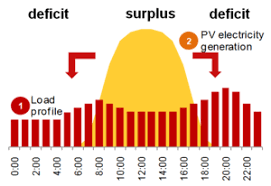
Net metering was created crafted to solve the imbalance of surplus power being produced by PV, while none is produced at night.  A storage, but expensive battery bank can solve the imbalance, but  net metering can be a cheap and viable solution

In a Resolution promulgated on July 1, 2013, the Energy Regulatory Commission (ERC) adopted the Rules Enabling the Net-metering Program for Renewable Energy, including the Net-metering Interconnection Standards (Net-metering Rules).  The Net-metering Rules allow electricity end-users who are updated in the payment of their electric bills to their distribution utility (DU) to engage in distributed generation. They can generate electricity from renewable energy (RE) sources like solar, wind, biomass or such other RE Systems not exceeding 100 kW that can be installed within the end-users’ premises and supply the electricity they generate in excess of what they can consume directly to their DU.  
In a net-metering arrangement, the end-user maintains a two-way connection to the distribution system and is only charged or credited, as the case may be, for the difference between the electricity supplied by the DU (import energy) and the electricity it supplies to the DU during times when it has excess RE generation (export energy), both of which are metered using 2 uni-directional meters, one for import and one for export, or a single bi-directional meter.  Under the Net-metering Rules, pending the development of a different pricing methodology, the net-metering customer’s export energy shall be priced based on its DU’s blended generation cost.  Included in the Net-metering Rules also are the standards, which shall be complied with and observed by the net-metering customer to address engineering, electric system reliability, and safety concerns for net-metering interconnections, such as those concerning voltage level, frequency, and power quality, and those relating to system protection.  
Section 10 of Republic Act No. 9513 or the Renewable Energy Act mandates the ERC, in consultation with the National Renewable Energy Board (NREB), to establish the net-metering interconnection standards and pricing methodology to usher in the implementation of the net-metering for renewable energy program.  NREB developed the draft net-metering rules, which after being subjected to public consultations and after a series of coordination meetings and workshops between the ERC and the NREB Technical Working Groups and the relevant stakeholders, was adopted and approved by the ERC.
“The net-metering program will definitely change the electricity landscape.  From just being recipients of electricity, electricity users may also now become generators, supplying not only their electricity requirements but also that of others through their distribution utilities’ system.  They avoid drawing electricity from the distribution grid equivalent to their own RE generation that they consume, in the process realizing savings in their electricity bills, and get paid a reasonable price for their RE generation that they cannot any more consume. It is a win-win, for the electricity end-user and, more importantly, for the environment because of the additional RE capacity that is shored up by the program,” ERC Chairperson and CEO Zenaida G. Cruz-Ducut explained.


If you read between the lines, this is really nothing at all.  A 3 kWp installation will generate more than 100 kwH month. The safety, quality, voltage frequency and power quality are meant to discourage applicants for net metering.  I could see ERC being effectively controlled by large power companies here, probably as defensive strategy as being used in Hawaii.  In Europe and Australia, and even rest of USA, the power utilities are losing out to rooftop  solar panels.

I was told that the 100 kwh limit is made to prevent system imbalance or a power surge (o my gosh, how many million homes would have solar installations to cause a system imbalance?  This is to protect the financial statement and the bottom lines, I dare say)

We have Renewable  Energy Law, we talk about climate change, we talk about green and clean energy;  what are these people at ERC doing.  We are protecting MERALCO  and other black tech power generating companies.

Why cant people embrace new technology and competition.  As in the past, local companies were protected by high tariff; and now we have protection for net metering for genco and other power distribution companies.

Power companies oppose net metering (from How Stuff works)


June 1, 2013

Zero Net Energy Center Houses Energy Training - EM Today Newsletter

ConEdison - Click Here!
Stay on top of data, news & analysis - get our free daily newsletter Subscribe
FIT Chart EIA

US Favors Net-Metering While Europe, Japan Like Feed-In-Tariffs

Recent developments in Virginia put a spotlight on feed-in tariffs (FITs), which are used to encourage deployment of renewable energy. In March, Dominion Virginia Power’s voluntary FIT for ...Full Article →

Legrand Reduces Energy Use by 28% in 3 Years

Legrand has been recognized by the US Department of Energy (DOE) for its continuing efforts to make energy efficiency a top priority through the company's involvement in the Better Buildings, ...Full Article →
Noesis logo

Noesis Helps Building Owners Find Energy Efficiency Financing

Noesis Energy launched a matchmaking service to connect building managers and owners wanting to invest in energy-efficiency projects with financing companies that specialize in loans for such ...Full Article →

Lux: Solar Market to Recover From Woes

Overcapacity and poor margins have bankrupted a multitude of solar suppliers and forced corporate investors out of the market over the past two years, but the industry is set to recover quickly ...Full Article →
Zero Net Center

Zero Net Energy Center Houses Energy Training

The Zero Net Energy Center in San Leandro, Calif., opened yesterday, and its owners say the commercial building retrofit meets the US Department of Energy's requirements for a "zero net energy" ...Full Article →
Hess - Click Here.

Ceramic Mid-Power LEDs Provide an Alternative to Plastic

Cree has created a mid-power ceramic LED as an alternative to the common mid-power plastic packages. Cree's new XLamp XH Series LEDs are optimized for fluorescent replacement lighting ...Full Article →
maiorino, al, public strategy group

Hydropower Opposition Slows Project Approvals

Opposition from NIMBY-type (not in my backyard) groups continue to slow down development of hydropower projects. Although hydropower plants are a source of complete renewable energy, employ ...Full Article →

Cisco Buys JouleX for $107 Million

Cisco will pay about $107 million in cash and retention-based incentives in exchange for all shares of privately-held JouleX, a firm involved in enterprise IT energy management. Atlanta-based ...Full Article →
Solar panels on building

Quality Crisis ‘Threatens’ Solar Industry

Testers, developers, financiers and insurers say that solar panels are facing a quality control crisis, just as the technology is on the cusp of widespread adoption, reports the New York Times. ...Full Article →

Restaurant Chain Sees 1 Year Payback of Energy Management System

The restaurant chain Not Your Average Joe's has deployed Powerhouse Dynamics' eMonitor energy and asset management system at its 18 locations, and the company says the system has paid for itself ...Full Article →
Hess - Click Here.
© 2013 Energy Manager Today · All rights reserved · About · Advertise · Subscribe


Sent to profjorge.entrep.arep620@blogger.com — why did I get this?
unsubscribe from this list | update subscription preferences
Energy Manager Today · 323 West Drake Rd · Suite 224 · Fort Collins, CO 80526

May 24, 2013

Rooftop solar installations threaten central generating units business models and utilites are fighting back

Repost from Clean Technica by Giles Parkinson | May 14, 2013

A battle between utilities and solar rooftop owners is emerging.  Electric utilities are seeing the net metering from solar rooftop owners as a grave threat to the central generating stations business model. It is contained in the position paper made by Edison Electric Institute.

 They see whole sale prices of electricity falling down,  loss of revenues, and irreparable damage to the business and and are not taking this lying down -  they are fighting back. They are lobbying to reduce FIT, and fighting net metering.  In Australia, where consumers have spent about $8 billion in rooftop panels, they formed a group known as Solar Citizens to fight utilities, which are mostly owned by the government.  Utilities dont want citizens take control of the electricity grid, are fighting net metering,  and make it harder for citizens to go solar

Are utilities fighting net metering in the PHL?

Is this the reason why solar projects are being stalled in the PHL?


May 20, 2013

Will net metering come to the PHIL?

Repost from Clean Technica | May 17, 2013

Will net metering come to the Phil?  If there is net metering, will the the PV installation take off?

Are utilities resisting net metering?  They are neither fans of solar energy/panels

How will net metering price outputs of solar panels?  Will they pay less, the same or more?

The guess is that they will pay less because they have transmission and other costs.   Are utilities afraid of net metering;   in US the utilities are charging more because of loss of revenues, which causes a spiral of loss of customers, more customers shifting to solar.  (Although in US, solar energy is just 1% of the total energy supply and may be inconsequential to this fear)

But net metering benefits many as in California.  Net metering accounts for growth in solar energy in California, creation of construction jobs for solar, permanent jobs, and lesser power costs.  Everybody benefits.  (Only the utilities dont)

Top Cleantech Stories Of The Day!


Top cleantech news of the day from CleanTechnica, the world's #1 cleantech or clean energy website:


Excerpts:

Improved Quality Control During Lithium-Ion Battery Production Thanks To New System

A new tool has been created by researchers at Purdue University that is able to detect flaws in lithium-ion batteries while they are still being manufactured, potentially greatly improving the quality and reliability of the batteries and also cutting down on waste/inefficiency. Specifically, the new tool is able to flag defects and inconsistencies in the thickness of electrodes that can limit the battery’s life and reliability. As a result of the inconsistencies being spotted right … Read More
Improved Quality Control During Lithium-Ion Battery Production Thanks To New System was originally published on: CleanTechnica. To read more from CleanTechnica, join over 30,000 others and subscribe to our free RSS feed, follow us on Facebook (also free!), follow us on Twitter, or just visit our homepage (yep, free).

Read on »


Solar Power Windows Fast Approaching Commercial Production

Commercial production of solar windows, using the patented SolarWindow spray-on solar power coating system, may be just around the corner. A recent announcement from US building integrated photovoltaics (BIPV) developer New Energy Technologies Ltd. (which we’ve been following for years) has us feeling that the time may soon come. As per New Energy Technologies’ recent announcement, the big news is that the fabrication time of the technology has been greatly reduced. The fabrication process, which … Read More
Solar Power Windows Fast Approaching Commercial Production was originally published on: CleanTechnica. To read more from CleanTechnica, join over 30,000 others and subscribe to our free RSS feed, follow us on Facebook (also free!), follow us on Twitter, or just visit our homepage (yep, free).

Read on »


New Report Outlines U.S. Miltary's Solar Powered Might

If you have any doubts about solar power’s place in the U.S. energy landscape, check out the new report from the Solar energy Industries Association (SEIA). Titled “Enlisting the Sun: Powering the U.S. Military with Solar Energy,” the report details solar power systems at Army, Navy, and Air Forces in more than 31 states and Washington, D.C. that add up to more than 130 megawatts. Though not a great deal relative to the Department of … Read More
New Report Outlines U.S. Miltary’s Solar Powered Might was originally published on: CleanTechnica. To read more from CleanTechnica, join over 30,000 others and subscribe to our free RSS feed, follow us on Facebook (also free!), follow us on Twitter, or just visit our homepage (yep, free).

Read on »


SolarCity Earnings – Mixed Results But Good Prospects

This article first appeared on the Roen Financial Report by Harris Roen SolarCity (SCTY) has been one of the hottest alternative energy stocks since its Initial Public Offering five short months ago. Yesterday it shot up 24% in one day, on the largest one-day volume since it opened, in anticipation of its quarterly earnings release. It is up 95% in the past three months, and has more than tripled from its initial trading price. As … Read More
SolarCity Earnings – Mixed Results But Good Prospects was originally published on: CleanTechnica. To read more from CleanTechnica, join over 30,000 others and subscribe to our free RSS feed, follow us on Facebook (also free!), follow us on Twitter, or just visit our homepage (yep, free).

Read on »


Net Metering: A Net Positive

This article first appeared on Mosaic by Rosana Francescato There's been a lot of talk lately about net metering. What's so special about net metering, and why all the fuss? Net metering is a simple concept that's policy in 43 states. It's like rollover minutes on a cell phone bill — it lets utility customers who install solar systems feed energy they generate into the grid if they don't need it at the time they're generating … Read More
Net Metering: A Net Positive was originally published on: CleanTechnica. To read more from CleanTechnica, join over 30,000 others and subscribe to our free RSS feed, follow us on Facebook (also free!), follow us on Twitter, or just visit our homepage (yep, free).

Read on »


New "Artificial Leaf" Concept Could Blow Up Fuel Cell Market

The idea of an “artificial leaf” sounds simple enough: Take a small, cheap, light-collecting device the size of a typical leaf, dunk it in a quart of water, and use solar energy to generate enough hydrogen gas for powering a small fuel cell. Scaled up, these solar-derived fuel cells would provide an energy storage solution that puts solar power on the same consistent, reliable footing as any fossil fuel. Various researchers have gotten most of … Read More
New “Artificial Leaf” Concept Could Blow Up Fuel Cell Market was originally published on: CleanTechnica. To read more from CleanTechnica, join over 30,000 others and subscribe to our free RSS feed, follow us on Facebook (also free!), follow us on Twitter, or just visit our homepage (yep, free).

Read on »


Did Energy Efficiency Drive 75% Of US CO2 Cuts In 2012?

This article originally appeared on RenewEconomy. By Sophie Vorrath Ever since the US saw its CO2 emissions hit a 20-year low last year, the widely held belief has been that natural gas played the dominant role by pushing coal out of the market. But, as Stephen Lacey reports over on GreentechEfficiency, researchers at CO2 Scoreboard have come to rather a different conclusion. They found that, on a nationwide level, more than 50 million megawatt-hours of coal simply dropped … Read More
Did Energy Efficiency Drive 75% Of US CO2 Cuts In 2012? was originally published on: CleanTechnica. To read more from CleanTechnica, join over 30,000 others and subscribe to our free RSS feed, follow us on Facebook (also free!), follow us on Twitter, or just visit our homepage (yep, free).

Read on »


Tesla Plans To Pay Off DOE Loan Early, Issues 2,703,027 Shares Of Common Stock + $450 Million Of Convertible Senior Notes

We previously reported on Tesla’s aim to pay back its Department of Energy (DOE) loan 5 years early. The company has made some strong steps in that direction this week with a couple of major fundraising announcements. As part of that, Elon Musk himself is investing a good chunk more money ($100 million) into the company. Naturally, these positive announcements (on top of all the others Tesla has been making in recent weeks) have helped … Read More
Tesla Plans To Pay Off DOE Loan Early, Issues 2,703,027 Shares Of Common Stock + $450 Million Of Convertible Senior Notes was originally published on: CleanTechnica. To read more from CleanTechnica, join over 30,000 others and subscribe to our free RSS feed, follow us on Facebook (also free!), follow us on Twitter, or just visit our homepage (yep, free).

Read on »


New DOE Secretary Ernest Moniz Gets Support From Cleantech & General Green Organizations

With Dr. Ernest Moniz officially confirmed at the next US Secretary of Energy, leading cleantech and green groups are getting their statements out regarding what they think of this. Here are a few I thought were worth publishing, followed by some of my own thoughts: EDF President Fred Krupp: Today's unanimous Senate vote to confirm Ernest Moniz as our next Secretary of Energy is great news for America. It shows that when Congress puts politics aside, … Read More
New DOE Secretary Ernest Moniz Gets Support From Cleantech & General Green Organizations was originally published on: CleanTechnica. To read more from CleanTechnica, join over 30,000 others and subscribe to our free RSS feed, follow us on Facebook (also free!), follow us on Twitter, or just visit our homepage (yep, free).

Read on »


Utility-Scale PV Power Plants Are Now Cost-Effective In Oregon

By Chris Robertson Large-scale solar power plants are now economic in Oregon. This is one of the surprising findings of the Oregon Solar Energy Industries Association's recently published "Vision to Integrate Solar in Oregon" (VISOR).  Produced by Chris Robertson & Associates, LLC, with support from the Bonneville Environmental Foundation, the VISOR study can be accessed at chrisrobertsonassociates.com The cost of producing solar electricity from large-scale power plants is less than the regulated avoided costs of the two … Read More
Utility-Scale PV Power Plants Are Now Cost-Effective In Oregon was originally published on: CleanTechnica. To read more from CleanTechnica, join over 30,000 others and subscribe to our free RSS feed, follow us on Facebook (also free!), follow us on Twitter, or just visit our homepage (yep, free).

Read on »


Nearly 100% Of New California Electricity To Be Solar In 2H 2013

Herman Trabish of Greentech Media has happened across a pretty interesting find — 97% of new electricity generation capacity in line to be added to the California grid in the second half (2H) of 2012 is from solar power projects. This is according to the California Independent System Operator (the ISO), as published in the 2012 Annual Report on Market Issues and Performance. In total, 1,633 megawatts of generation capacity are in line to be added to the grid in … Read More
Nearly 100% Of New California Electricity To Be Solar In 2H 2013 was originally published on: CleanTechnica. To read more from CleanTechnica, join over 30,000 others and subscribe to our free RSS feed, follow us on Facebook (also free!), follow us on Twitter, or just visit our homepage (yep, free).

Read on »

CleanTechnica.com
Thanks for loving us. 
View this email in your browser
Related Sites:
EV Obsession
Solar Love
Bikocity
GreenBuildingElements.com
Ecopreneurist.com
Gas2.org
GreenLivingIdeas.com
sustainablog.org
InspiredEconomist.com
RedGreenandBlue.org
Planetsave.com
ImportantMedia.org

Some rights reserved 

unsubscribe from this list    update subscription preferences