Savings from oil and coal importation
From Yahoo News: ERC issues net metering rules | July 8, 2013

The ERC has recently issued the rules for net metering of solar energy with the grid. The rules set the limit at 100 kwh/month, and there are standards relating to: voltage, frequency, power quality and system protection. Only those who are updated in their monthly payments can qualify to participate: Here is the excerpt (
ERC Net Metering Rules
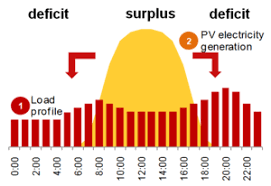
Net metering was created crafted to solve the imbalance of surplus power being produced by PV, while none is produced at night. A storage, but expensive battery bank can solve the imbalance, but net metering can be a cheap and viable solution
In a Resolution
promulgated on July 1, 2013, the Energy Regulatory Commission (ERC)
adopted the Rules Enabling the Net-metering Program for Renewable
Energy, including the Net-metering Interconnection Standards
(Net-metering Rules). The Net-metering Rules allow electricity
end-users who are updated in the payment of their electric bills to
their distribution utility (DU) to engage in distributed generation.
They can generate electricity from renewable energy (RE) sources like
solar, wind, biomass or such other RE Systems not exceeding 100 kW that
can be installed within the end-users’ premises and supply the
electricity they generate in excess of what they can consume directly to
their DU.
In a net-metering arrangement, the
end-user maintains a two-way connection to the distribution system and
is only charged or credited, as the case may be, for the difference
between the electricity supplied by the DU (import energy) and the
electricity it supplies to the DU during times when it has excess RE
generation (export energy), both of which are metered using 2
uni-directional meters, one for import and one for export, or a single
bi-directional meter. Under the Net-metering Rules, pending the
development of a different pricing methodology, the net-metering
customer’s export energy shall be priced based on its DU’s blended
generation cost. Included in the Net-metering Rules also are the
standards, which shall be complied with and observed by the net-metering
customer to address engineering, electric system reliability, and
safety concerns for net-metering interconnections, such as those
concerning voltage level, frequency, and power quality, and those
relating to system protection.
Section 10 of Republic Act No. 9513 or
the Renewable Energy Act mandates the ERC, in consultation with the
National Renewable Energy Board (NREB), to establish the net-metering
interconnection standards and pricing methodology to usher in the
implementation of the net-metering for renewable energy program. NREB
developed the draft net-metering rules, which after being subjected to
public consultations and after a series of coordination meetings and
workshops between the ERC and the NREB Technical Working Groups and the
relevant stakeholders, was adopted and approved by the ERC.
“The net-metering program will
definitely change the electricity landscape. From just being recipients
of electricity, electricity users may also now become generators,
supplying not only their electricity requirements but also that of
others through their distribution utilities’ system. They avoid drawing
electricity from the distribution grid equivalent to their own RE
generation that they consume, in the process realizing savings in their
electricity bills, and get paid a reasonable price for their RE
generation that they cannot any more consume. It is a win-win, for the
electricity end-user and, more importantly, for the environment because
of the additional RE capacity that is shored up by the program,” ERC Chairperson and CEO Zenaida G. Cruz-Ducut explained.
If you read between the lines, this is really nothing at all. A 3 kWp installation will generate more than 100 kwH month. The safety, quality, voltage frequency and power quality are meant to discourage applicants for net metering. I could see ERC being effectively controlled by large power companies here, probably as defensive strategy as being used in Hawaii. In Europe and Australia, and even rest of USA, the power utilities are losing out to rooftop solar panels.
I was told that the 100 kwh limit is made to prevent system imbalance or a power surge (o my gosh, how many million homes would have solar installations to cause a system imbalance? This is to protect the financial statement and the bottom lines, I dare say)
We have Renewable Energy Law, we talk about climate change, we talk about green and clean energy; what are these people at ERC doing. We are protecting MERALCO and other black tech power generating companies.
Why cant people embrace new technology and competition. As in the past, local companies were protected by high tariff; and now we have protection for net metering for genco and other power distribution companies.
Power companies oppose net metering (from How Stuff works)